
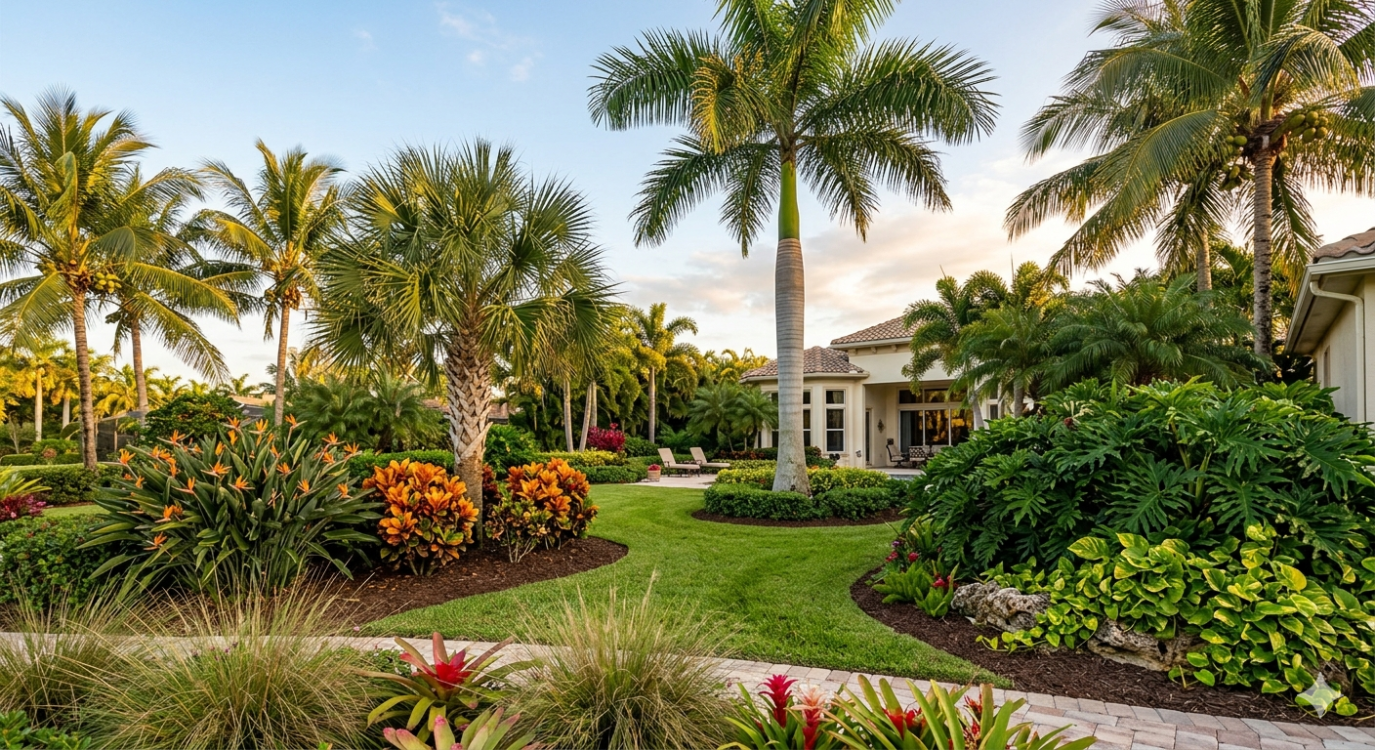

Walk through any stunning landscape in Naples, Bonita Springs, or Fort Myers, and you will quickly notice that the magic begins with the plants themselves. The right combination of palms, flowering tropicals, ornamental grasses, and ground covers can transform an ordinary yard into a breathtaking outdoor retreat. But in Southwest Florida, plant selection is not simply about what looks beautiful at the nursery. It is about understanding how each plant will perform in our unique climate, how it will mature over time, and how it will work in harmony with everything else in your landscape design.
At Rise Architectural Design Group, plant selection is one of the most thoughtful and intentional parts of our design process. Every plant we recommend has been evaluated for its suitability to our region, its long-term performance, and its contribution to the overall aesthetic and ecological health of your landscape. Here is what every Southwest Florida homeowner and property owner should understand about choosing the right plants and palms for their outdoor spaces.
Understanding Southwest Florida's Growing Conditions
Before you can choose the right plants, you need to understand the environment you are planting into. Southwest Florida sits within USDA Hardiness Zones 10a and 10b, which means we experience warm temperatures year-round, high humidity, intense sun, heavy summer rainfall, and occasional cold snaps in the winter months. Our soils tend to be sandy and fast-draining, which affects how plants access water and nutrients. Salt air is also a significant factor for properties closer to the Gulf Coast, as not every plant can tolerate the salt-laden winds that move through coastal communities.
These conditions are both a blessing and a challenge. On one hand, we can grow an extraordinary variety of tropical and subtropical plants that homeowners in other parts of the country can only dream about. On the other hand, choosing the wrong plant for the wrong location can result in poor performance, pest problems, and costly replacements down the road.
Sun Exposure and Microclimates
One of the most important factors in plant selection is understanding the sun exposure in different areas of your property. A plant that thrives in full sun along your driveway may struggle in the shadier areas beneath your roof overhang or under a dense tree canopy. Professional landscape designers take the time to study the microclimates on your property, identifying areas that receive full sun, partial shade, or full shade throughout the day. This information is essential for placing plants where they will truly thrive rather than simply survive.
Soil and Drainage Considerations
Our sandy Southwest Florida soils drain quickly, which is great for avoiding waterlogged roots but also means that nutrients and moisture can be lost rapidly. Amending the soil with quality organic matter and selecting plants that are well-adapted to our native soil conditions is a critical part of sustainable, low-maintenance landscape design. Some plants demand rich, well-amended soil while others are remarkably content in our lean, sandy conditions. Knowing the difference saves homeowners significant time and money in the long run.
The Best Palms for Southwest Florida Landscapes
No Southwest Florida landscape feels complete without palms. They define the tropical character of our region, provide structural height and drama, and offer year-round greenery that endures our heat and humidity with grace. However, not all palms are created equal, and choosing the right species for your specific property and design vision makes all the difference.
Sabal Palm — Florida's State Tree
The Sabal Palm, also known as the Cabbage Palm, is Florida's state tree for good reason. It is incredibly hardy, drought-tolerant once established, and capable of withstanding strong winds, making it an excellent choice for hurricane-prone Southwest Florida. Sabal Palms are also salt-tolerant and can thrive in a wide range of soil conditions. Their graceful arching fronds and distinctive trunk provide a natural, native feel that complements both contemporary and traditional landscape styles.
Royal Palm
For grand, formal landscapes and estate properties, the Royal Palm is one of the most striking choices available. With its smooth, light gray trunk and perfectly symmetrical crown, the Royal Palm commands attention and creates a sense of elegant grandeur. These palms grow tall and prefer well-drained soil with regular moisture. They are well suited to our warm climate but may need some protection from frost in colder winters.
Foxtail Palm
The Foxtail Palm has become enormously popular in Southwest Florida landscapes, and it is easy to see why. Its full, feathery fronds have a lush, layered appearance that adds instant tropical drama to any design. Foxtail Palms are relatively fast-growing and do well in our climate, though they prefer consistent moisture and good soil nutrition to perform at their best.
Windmill Palm and Pindo Palm
For smaller properties or areas where a more compact palm is needed, the Windmill Palm and Pindo Palm offer excellent alternatives. Both are cold-hardy, which provides a welcome buffer during the occasional cool spells that move through Southwest Florida. Their manageable size makes them ideal for framing entryways, flanking garden beds, or creating layered planting compositions in smaller spaces.
Top Tropical Plants and Flowering Specimens for Southwest Florida
Beyond palms, Southwest Florida's climate supports an extraordinary palette of tropical plants that bring color, texture, and life to landscape designs throughout the year. Selecting the right combination of flowering plants, foliage specimens, and ornamental grasses allows a skilled designer to create landscapes that engage the eye and change with the seasons in subtle and beautiful ways.
Bougainvillea
Few plants deliver more visual impact than Bougainvillea. When trained along a fence, cascading over a wall, or climbing a trellis, its vibrant magenta, orange, red, or white bracts create a show that stops traffic. Bougainvillea thrives in full sun and actually performs better with minimal water once established, making it a surprisingly low-maintenance choice for high-impact color in Southwest Florida landscapes.
Plumbago
Plumbago is a versatile and reliable shrub that produces delicate clusters of sky-blue flowers nearly year-round in Southwest Florida. It grows quickly, tolerates heat and drought, and works beautifully as a foundation plant, hedge, or mass planting. Its soft blue color pairs elegantly with white flowering specimens and the deep greens of tropical foliage plants.
Ixora
Ixora is a beloved staple in Southwest Florida landscaping, prized for its dense, rounded clusters of bright red, orange, or yellow flowers. It thrives in our warm climate and performs best in acidic soil with good drainage. Ixora works well as a specimen plant, a low hedge, or a mass planting along borders and entryways. Regular feeding with an acid-forming fertilizer keeps Ixora looking its best throughout the year.
Heliconia and Bird of Paradise
For bold, architectural statements, Heliconia and Bird of Paradise are two of the most dramatic tropical specimens available to Southwest Florida homeowners. Their large, vibrant flowers are unmistakably tropical and lend an exotic, resort-quality feel to residential and commercial landscapes alike. Both plants prefer full sun, regular moisture, and protection from strong winds to look their absolute best.
Ornamental Grasses and Ground Covers
Ornamental grasses and low-growing ground covers play an important supporting role in any well-designed landscape. They fill in spaces between larger specimens, provide textural contrast, stabilize soil, and reduce maintenance needs by limiting weed intrusion. Some excellent choices for Southwest Florida include Muhly Grass, which produces stunning pink plumes in the fall, and Liriope, a shade-tolerant ground cover that stays neat and attractive with minimal care.
Why Professional Plant Selection Matters
With such an abundance of beautiful plants available at local nurseries and garden centers, it can be tempting to simply choose whatever appeals to you in the moment. But professional landscape designers bring a level of expertise to plant selection that goes far beyond aesthetics. A skilled designer considers not only how a plant looks today but how it will look five and ten years from now. They think about mature size, root behavior, water requirements, pest susceptibility, and how each plant will interact with its neighbors as the landscape grows and matures.
Poor plant selection is one of the most common and costly mistakes homeowners make in their landscapes. Planting an invasive species too close to a structure, choosing a sun-loving plant for a shady location, or selecting specimens that will quickly outgrow their space are all mistakes that can be avoided with professional guidance from the beginning.
- Plants should be chosen for long-term performance, not just short-term beauty
- Mature size and root system behavior must be carefully considered during plant selection
- Water requirements should align with your irrigation system's capacity and efficiency goals
- Salt tolerance is essential for properties near the Gulf Coast and coastal waterways
- Native and Florida-friendly plants typically require less fertilizer, pesticide, and irrigation
- Plant layering — using varying heights and textures — creates depth and visual interest
- Seasonal color can be strategically incorporated through annuals and perennials for year-round vibrancy
At Rise Architectural Design Group, our plant selection process reflects our deep commitment to both beauty and environmental stewardship. We believe that a well-planted landscape is not just visually stunning — it is a living ecosystem that supports pollinators, provides habitat for wildlife, improves air quality, and enriches the natural character of Southwest Florida.
Let Rise ADG Guide Your Plant Selection Journey
Whether you are designing a brand new landscape from scratch or refreshing an existing one with fresh plant material, the expertise of a professional landscape designer makes all the difference. Our team at Rise Architectural Design Group has spent years studying the plants, palms, and tropical specimens that perform best across Southwest Florida's diverse microclimates and property types. We know what works in Naples' coastal communities, what thrives in Fort Myers' inland neighborhoods, and how to create stunning, sustainable landscapes that endure and evolve beautifully over time.
If you are ready to create a landscape that is as thoughtfully planted as it is beautiful, we would love to help. Reach out to Rise ADG today and let us design an outdoor space that reflects the extraordinary natural beauty of Southwest Florida in every leaf, frond, and flower.