
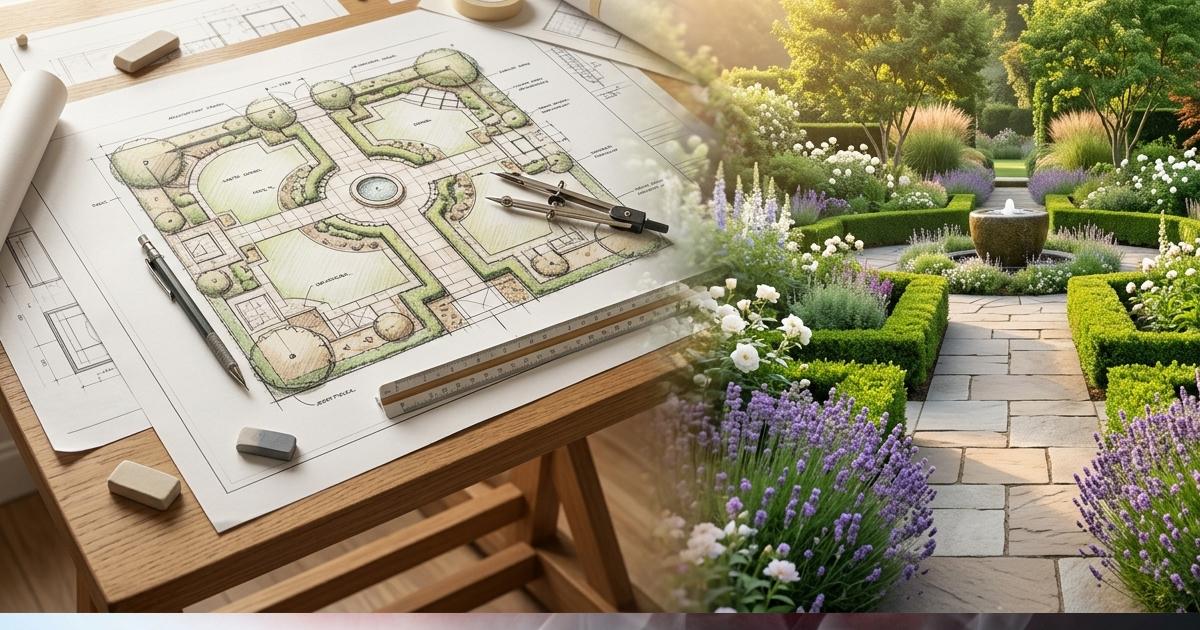

There is a moment in every landscape project — somewhere between the initial conversation and the first shovel in the ground — where everything either comes together with clarity or spirals into costly guesswork. That moment is the design rendering. At Rise Architectural Design Group, we believe that what happens on paper, or screen, before a single plant is installed is just as important as the installation itself. A professional landscape design rendering is not simply a pretty picture. It is a strategic roadmap that protects your investment, aligns your vision with reality, and ensures that what gets built is exactly what you imagined.
If you have ever completed a landscaping project and felt like something was off — maybe the scale was wrong, the plant placement felt awkward, or the whole composition did not flow the way you hoped — there is a good chance the process skipped this critical step. Let us walk through what a landscape design rendering truly is, why it matters so deeply, and how it changes the entire trajectory of your outdoor project.
What Is a Landscape Design Rendering?
A landscape design rendering is a visual representation of your proposed landscape plan, developed by a professional designer before any installation begins. Depending on the complexity of the project and the tools being used, renderings can range from detailed hand-drawn plans to sophisticated digital illustrations that show your property in vivid, lifelike color.
At Rise ADG, our design process involves a thorough assessment of your property, your lifestyle goals, your aesthetic preferences, and the unique environmental conditions of your Southwest Florida site. From there, our team develops a rendering that shows you exactly how your finished landscape will look — including plant placement, hardscape elements, lighting concepts, focal points, and spatial flow.
The Difference Between a Site Plan and a Rendering
It is worth understanding the distinction between a basic site plan and a full design rendering. A site plan is a technical overhead drawing that shows dimensions, boundaries, and layout. While useful, it tells you where things are going, not what they will look or feel like. A rendering, by contrast, brings dimension and life to the plan. It helps you visualize the depth of a planting bed, the canopy of a mature tree, the glow of landscape lighting along a pathway, or the way a hedge creates privacy along your property line.
For residential estate clients and commercial property owners in Southwest Florida, this distinction is enormous. When you are investing in a high-end landscape, you deserve to see what you are paying for before the first plant goes in the ground.
2D Plans vs. 3D Visualizations
Modern landscape design has evolved well beyond flat blueprints. Today's professional designers have access to tools that can generate three-dimensional visualizations, showing your property from multiple angles and at different times of day. This technology gives you a realistic preview of how your space will look at ground level, from a second-floor window, or from the street — perspectives that are impossible to grasp from a basic overhead plan alone.
Why the Rendering Process Protects Your Investment
Here in Southwest Florida, landscapes are a significant financial investment. Whether you are transforming a residential estate in Naples, enhancing a commercial property entrance in Fort Myers, or redesigning the common areas of a community in Bonita Springs, the costs add up quickly. A professional design rendering is the single most effective tool for making sure that investment is spent wisely.
Catching Problems Before They Become Expensive Mistakes
One of the greatest values of a design rendering is its ability to reveal problems early. Perhaps a proposed tree will eventually block a prized view. Maybe the scale of a planting bed is overwhelming in relation to the structure behind it. Possibly the hardscape element you envisioned creates a drainage challenge that needs to be addressed. All of these issues can be identified and corrected at the design stage — where changes cost nothing — rather than at the installation stage, where changes cost everything.
This is not a hypothetical benefit. It is something our team at Rise ADG encounters regularly. Clients come to us having received a basic plan from another provider, and when we walk through the rendering process together, we uncover details that would have resulted in costly revisions or disappointing outcomes. Catching those issues at the design phase saves thousands of dollars and months of frustration.
Aligning Expectations Between Client and Designer
Even the most communicative client-designer relationship benefits from a shared visual reference. Language is imprecise. When a client says they want their landscape to feel lush and tropical, that phrase means something different to every person in the room. A rendering eliminates ambiguity. It replaces verbal descriptions with visual evidence, ensuring that both the client and the design team are working toward the exact same outcome.
This alignment is especially important in commercial landscaping, where multiple stakeholders — property managers, ownership groups, HOA boards — may need to approve the design. A professional rendering makes those conversations easier, faster, and far more productive than trying to describe a finished landscape in words alone.
Planning for the Future, Not Just the Present
Florida landscapes grow — and they grow fast. The lush, dense planting that looks perfect in year one can become overcrowded and unmanageable by year three if spacing and growth habits are not carefully considered during the design phase. A well-executed rendering accounts for mature plant sizes, canopy spread, and the long-term composition of the landscape. This forward-thinking approach is a hallmark of professional design and something that separates a thoughtful plan from a reactive one.
What the Rendering Process Looks Like at Rise ADG
At Rise Architectural Design Group, our rendering process is collaborative, thorough, and deeply rooted in the specific conditions of Southwest Florida. John Gargano, our FNGLA Certified Horticulture Professional and company founder, brings both horticultural expertise and design vision to every project. Here is how the process typically unfolds:
- Initial Consultation: We begin by listening. We want to understand how you use your property, what inspires you aesthetically, what challenges your current landscape presents, and what your long-term goals are for the space.
- Site Assessment: We conduct a thorough evaluation of your property, including soil conditions, drainage patterns, sun and shade exposure, existing plant material, and any architectural elements that will influence the design.
- Concept Development: Based on the consultation and site data, our team develops an initial design concept, identifying plant selections, hardscape elements, lighting concepts, and spatial organization.
- Rendering Creation: The concept is translated into a detailed visual rendering that brings your future landscape to life. For larger or more complex projects, we may develop multiple views or phased plan options.
- Collaborative Review: We present the rendering to you and walk through every element together. Your feedback shapes the refinements. We do not move forward until you are fully confident in what has been designed.
- Final Plan and Installation: Once the design is approved, our installation team executes the plan with precision, guided every step of the way by the rendering that was developed and refined before a single plant was installed.
The Connection Between Great Design and Great Maintenance
One detail that often surprises clients is how much the design rendering influences long-term maintenance. A landscape that is thoughtfully designed with the right plants in the right places — properly spaced, appropriate for the site conditions, and selected for their growth habits — is significantly easier and less expensive to maintain over time. At Rise ADG, our Design - Build - Maintain philosophy means we think about maintenance from the very first design conversation. The rendering is where that thinking begins to take shape.
Investing in the Design Is Investing in the Outcome
There is a temptation, especially in competitive markets, to skip the design process in favor of moving quickly to installation. We understand the excitement of wanting to see your new landscape take shape. But at Rise ADG, we have seen too many projects suffer — financially and aesthetically — because the foundational design work was rushed or bypassed entirely.
A professional landscape design rendering is not an added luxury for large budgets. It is an essential step for any project where the outcome matters. It is the difference between a landscape that exceeds your expectations and one that leaves you wondering what went wrong. It is the difference between a space that grows more beautiful with every passing year and one that requires expensive corrections down the road.
If you are ready to begin the landscape design process for your Southwest Florida home or commercial property, we invite you to connect with the Rise ADG team. Let us show you what your landscape can become — before we ever break ground.