
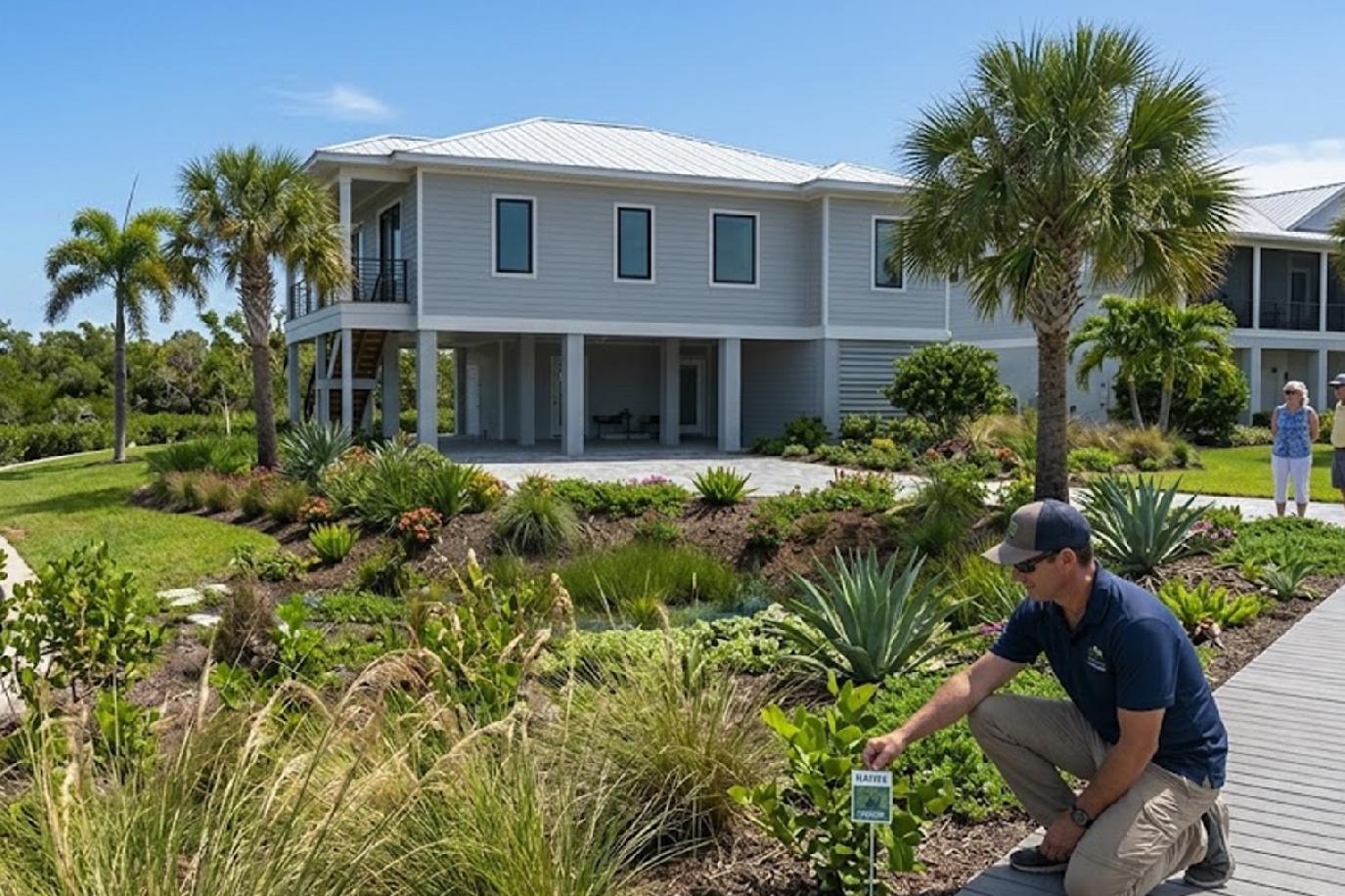

In Southwest Florida, landscapes aren’t just designed for beauty—they need to be built for resilience. Between heavy rains, tropical storms, and seasonal wind events, outdoor spaces are constantly being challenged. A well-designed landscape doesn’t just survive these conditions; it recovers quickly afterward.
At Rise Landcare, we focus on creating landscapes that are intentionally structured to recover faster after storm events while maintaining long-term health, stability, and beauty.
Why Storm Recovery Should Be Part of Landscape Design
Most homeowners think about storm preparation, but fewer consider what happens after the storm passes. Recovery speed is just as important as resistance.
A well-prepared landscape can:
- Shed excess water more efficiently
- Reduce soil erosion and root exposure
- Recover plant structure faster after wind stress
- Minimize long-term damage to turf and planting beds
- Maintain usability of outdoor spaces sooner
Designing with recovery in mind helps ensure your yard doesn’t stay damaged long after weather events pass.
Plant Placement That Reduces Post-Storm Damage
Strategic planting is one of the most effective ways to improve recovery speed. When plants are positioned correctly, they support each other and reduce overall stress on the landscape system.
Key strategies include:
- Grouping plants by wind tolerance levels
- Using deeper-rooted species in exposed areas
- Creating layered plant structures for wind buffering
- Avoiding overly dense planting in flood-prone zones
- Placing flexible species along outer landscape edges
These decisions reduce breakage and help landscapes bounce back faster after storms.
Soil Health Is the Foundation of Fast Recovery
Healthy soil is one of the most overlooked factors in storm resilience. Compacted or nutrient-poor soil slows drainage and delays regrowth after heavy rainfall.
Improving soil health supports:
- Faster water absorption and drainage
- Stronger root regeneration after stress
- Reduced erosion during heavy rain events
- Improved nutrient availability for recovery growth
- Better long-term plant stability
In Southwest Florida’s climate, soil performance directly impacts how quickly a landscape can reset after a storm.
Hardscape Design Helps Stabilize the Entire System
Hardscaping plays a critical role in post-storm recovery by guiding water flow and protecting vulnerable planting areas.
Effective design elements include:
- Properly graded walkways and borders
- Retaining edges that stabilize soil movement
- Drainage-conscious patio and seating layouts
- Defined flow paths that reduce turf damage
- Structural barriers that protect high-risk zones
When hardscape and landscape elements work together, recovery becomes significantly faster and more predictable.
Maintenance Planning That Accelerates Recovery Time
Even the best-designed landscape benefits from a recovery plan. Routine maintenance before and after storm season helps reduce long-term disruption.
Smart maintenance strategies include:
- Seasonal pruning before peak storm periods
- Clearing drainage pathways regularly
- Reinforcing mulch and soil coverage in exposed areas
- Monitoring plant health after heavy rain events
- Resetting soil and plant structure when needed
These steps help landscapes return to full strength much sooner after weather events.
Building Landscapes That Don’t Just Survive—They Recover
True landscape resilience isn’t about avoiding damage entirely—it’s about minimizing downtime and restoring function quickly. A well-designed outdoor space should feel stable, intentional, and ready to rebound after seasonal stress.
That’s the approach behind every project at Rise Landcare: landscapes that are not only built for beauty, but designed for recovery, adaptability, and long-term performance in Southwest Florida’s demanding environment.